What is Influencer Seeding? A Complete Guide
Influencer seeding is the practice of gifting products to creators with no posting requirements. This complete guide explains what it is, who benefits, how to set up a strategy, and what pitfalls to avoid.
Imagine your target customer scrolling through their feed and seeing their favourite creator genuinely excited about a product they've never heard of. No scripted talking points, no obvious disclaimer - just real enthusiasm. That's the power of influencer seeding done right.
Seeding is one of the most misunderstood tools in a brand's growth playbook. Done well, it generates a constant stream of authentic content, builds a loyal creator network, and unlocks reach that paid ads simply can't replicate. Done poorly, it's a box in the bin and a wasted product margin.
This guide covers everything: what influencer seeding actually is, who benefits from it, what makes a campaign succeed, and how to measure whether yours is working. Once you have the foundations in place, The Five-Step Influencer Seeding Blueprint gives you the repeatable execution system.
What is Influencer Seeding?
Influencer seeding (sometimes called product seeding or product gifting) is the practice of sending free products to selected creators with no formal obligation to post. There's no contract, no fixed deliverable, and no upfront payment. You're putting your product in the hands of the right people and letting their honest experience do the talking.
Think of it as planting a seed. You nurture the relationship, offer something of genuine value, and let it grow organically. If the creator loves the product, they share it. If their audience responds, you have real social proof - and a shortlist of creators worth investing in for a paid partnership.
How Influencer Seeding Differs From Influencer Gifting and Paid Partnerships
These three terms are often used interchangeably, but they represent distinct stages of the same funnel:
Gifting is your introduction. Seeding is your audition process. A paid partnership is when both sides are confident enough to make it official. Each stage builds on the last - and seeding is the step that bridges goodwill into trackable business value.
Why Brands Invest in Influencer Seeding
The appeal is straightforward: you get authentic reach, real UGC, and potential long-term partnerships - all without the upfront costs of a traditional sponsored campaign. But there are several specific reasons brands keep coming back to seeding as a core channel.
Authenticity That Paid Content Can't Replicate
When a creator posts about your brand without a sponsorship agreement, their audience notices. There's no "paid partnership" label. No perfectly polished script. Just a real person sharing something they actually like. That authenticity is the highest-performing currency in social commerce - and it can't be bought outright, only earned.
Cost-Effective at Scale
Seeding campaigns cost a fraction of traditional sponsored posts. Your spend is product and shipping. That means you can reach 50 micro-influencers for the cost of a single macro-influencer campaign - and often generate more engaged content across a wider range of audience segments.
For Shopify brands operating on a lean marketing budget, this efficiency is game-changing. You're not gambling on a single creator; you're spreading your bets intelligently.
A Built-In Creator Vetting Process
Before you spend thousands on a paid collaboration, seeding tells you who actually performs. Track who posts, what their content looks like, and how their audience responds. The creators who generate real engagement during seeding are the ones worth investing in for structured campaigns - and the five-step seeding blueprint breaks down exactly how to run that pipeline at scale.
Compounding UGC
Every organic post a creator makes becomes an asset. That content can be repurposed in paid ads, on product pages, in email campaigns, and across your own social channels. One well-targeted seeding campaign can generate months of high-converting creative - all from the cost of a few product boxes.
Foundation for Long-Term Creator Relationships
The best brand-creator partnerships start somewhere informal. A gifted product that genuinely impresses a creator sets the stage for a relationship built on mutual respect rather than a transactional brief. Those creators become your most loyal ambassadors - and the most credible voices your brand can have.
What Brands Benefit Most From Influencer Seeding?
Seeding works best when the product can be experienced, demonstrated, or shown. Industries where the format consistently delivers results include:
- Beauty and skincare - Before-and-after content, routine integrations, and honest reviews are native to the format
- Health and wellness - Supplements, fitness equipment, and healthy foods thrive when creators share personal transformations
- Fashion and lifestyle - Styling videos and haul content generate organic reach with minimal friction
- Food and beverage - Taste tests and recipe integration create immediate engagement
- Consumer tech and accessories - Unboxing videos and hands-on demos build real purchase intent
- Home and interiors - Room reveals and "this changed my space" content perform strongly on Pinterest and TikTok
The common thread: these are all categories where a creator can bring the product to life in a way that resonates with their specific audience. If your product is highly technical, regulated, or requires extensive explanation, seeding may need to be paired with more structured creative direction.
What Types of Influencers Work Best for Seeding?
Not all creators are equal when it comes to seeding outcomes. Here's how the tiers typically perform:
Nano-Influencers (1,000 – 10,000 followers)
The highest trust tier. Nano-influencers have a close-knit, highly engaged community. Their recommendations carry genuine weight because followers often feel like they know them personally. Ideal for hyper-targeted seeding into specific niches or local markets.
Micro-Influencers (10,000 – 100,000 followers)
The sweet spot for most seeding campaigns. Micro-influencers balance reach with authenticity—they have enough of an audience to move the needle, but they're still personal enough to generate real engagement. According to current TikTok influencer marketing benchmarks, micro-influencers consistently outperform larger tiers on engagement rate.
Macro-Influencers (100,000 – 1 million followers)
Still viable for seeding if there's genuine product alignment and a long-term collaboration potential. However, lower engagement rates and higher expectations around receiving compensation mean they're typically better suited to paid campaigns once a relationship is established.
Mega-Influencers and Celebrities (1 million+ followers)
Generally not the right fit for unpaid seeding. The cost-per-unit of their organic mentions, if they happen at all, is hard to justify. A better use of a mega-influencer relationship is a paid partnership once product-market fit and brand alignment are confirmed.
The Sonar Seed recommendation: Lead with nano and micro-influencers. They account for the majority of authentic UGC generated through seeding programs, and their communities have the highest likelihood of driving actual purchase decisions - especially among Gen Z and millennial buyers.
How to Set Up a Successful Influencer Seeding Strategy
A seeding campaign isn't just about sending boxes. It's a system. Here's how to build one that runs consistently and compounds over time.
1. Define Your Goals
What does success look like? Before you send a single product, get specific:
- Are you generating UGC for paid ads?
- Building brand awareness in a new niche or geography?
- Testing creator fit before committing to paid partnerships?
- Driving affiliate sales through organic posts?
Your goal determines who you target, what you send, and how you measure performance. For a complete breakdown of goal-setting within a wider seeding system, see the five-step influencer seeding blueprint.
2. Identify the Right Creators
This is where most brands underinvest. Quality of targeting matters more than volume of packages sent. Look for:
- Niche alignment - Does this creator's content naturally overlap with your product category?
- Engagement rate - Are their followers active, or is the account inflated with low-quality traffic?
- Audience demographics - Do their followers match your customer profile?
- Content quality - Is their existing content something you'd be proud to be featured in?
Tools like Sonar Seed let you discover creators by niche and engagement data directly inside your Shopify dashboard - so you're not spending hours cross-checking spreadsheets.
3. Personalise Your Outreach
A generic "Hey, we'd love to send you our product!" message gets deleted. A specific, genuine note gets a reply.
Reference something real: a recent post, a shared value, a specific reason you think they'd love the product. Make it clear there are no posting obligations. And make it easy - one question, one action, one next step.
Example opening:
Hey [Name], I've been following your skincare content for a while - especially your reel on SPF layering. We make a lightweight daily SPF that I genuinely think you'd want to test. No strings attached, no requirement to post. Would it be okay if I sent you a sample?
4. Create a Memorable Unboxing Experience
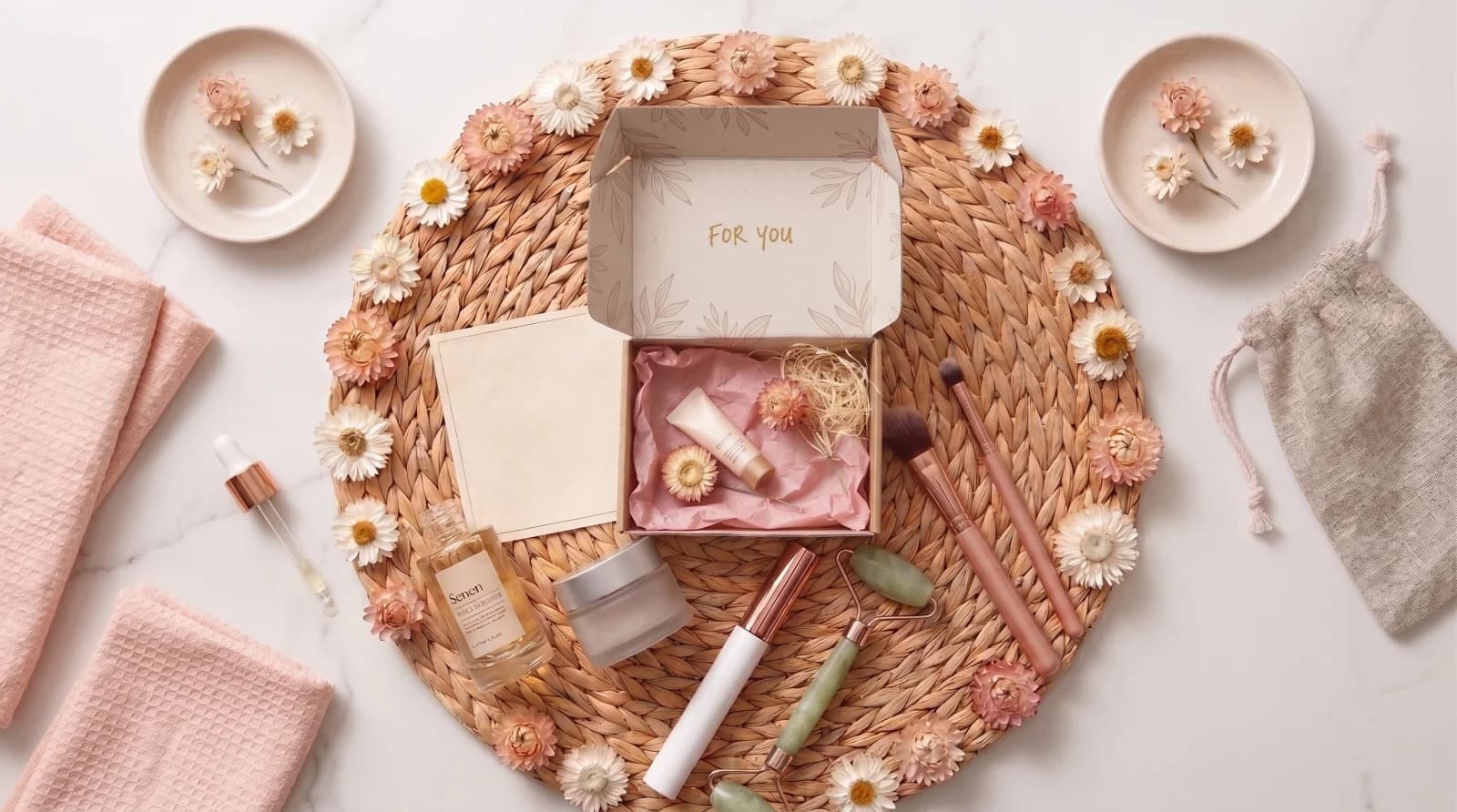
When the answer is yes, the product itself has to earn its keep. The unboxing is your only chance to make a first impression in person - and it should feel like receiving something from a thoughtful friend, not fulfilling a promotional obligation.
- Lead with your best product. Don't send a sample. Send the real thing.
- Invest in packaging. Branded, beautiful boxes are the difference between "opened and set aside" and "filmed and posted."
- Include a personal note. Even a short, handwritten card dramatically increases the likelihood of a response and a post.
- Add a thoughtful extra. A product accessory, a brand guide with usage tips, or something tied to the creator's specific interest shows you paid attention.
5. Track Who Posts and What Performs
Set up a simple tracking system before you launch. You need to know:
- Post rate - What percentage of gifted creators published content? (25–50% is a strong benchmark for well-targeted campaigns)
- Earned reach - How many people were exposed to your brand through organic mentions?
- Engagement rate - Did the posts generate conversation?
- UGC quality - Is the content usable for repurposing in ads or on your website?
With Sonar Seed, this data is tracked automatically. Every gifted product is logged against a creator profile, and any resulting affiliate sales are attributed directly to their unique discount code - so you can see exactly what each creator is worth to your business.
6. Follow Up—Without Being Pushy
If a creator received your product and hasn't posted after a couple of weeks, a gentle check-in is appropriate. Ask how they're finding the product, not whether they've posted. The goal is to keep the conversation open and the relationship warm.
If they loved it but haven't shared it publicly, offer to make it even easier - a suggested caption, a tag format, or a specific prompt. If they're not interested in posting, take the data point and move on. Not every seed grows, and that's part of the strategy.
7. Transition to Long-Term Partnerships
Creators who post organically and generate engagement are your most valuable discovery. These are the people worth formalising a relationship with. Sonar Seed makes this transition seamless - once a creator is identified as a strong performer, you can onboard them as an affiliate, assign a unique commission tier, and begin tracking their ongoing contribution to your revenue.
The Full Seeding Workflow at a Glance
What Are the Limitations of Influencer Seeding?
Seeding is powerful - but it's not perfect. Understanding where it falls short helps you plan realistically and set expectations with internal stakeholders.
- No guaranteed content. You can send 50 packages and receive 10 posts. That's not failure - it's the cost of working without contractual obligations. The data you gather from those 10 posts is still valuable.
- Difficult to attribute direct sales. Organic posts don't always have trackable links. Until a creator becomes an affiliate with a unique code, it's hard to connect seeding activity directly to revenue.
- Not suited to every product category. Highly technical, regulated, or low-visual products are harder to seed effectively. If a creator can't demonstrate the product's value in a 30-second clip, the format may not be the right fit.
- Resource-intensive without the right tools. Managing hundreds of creator relationships manually - tracking addresses, following up, logging results - is a full-time job. Brands that try to run this at scale in a spreadsheet usually burn out before it compounds.
- Compliance considerations. In many markets, creators are legally required to disclose gifted products. While most platforms and creators are increasingly familiar with this, it's worth building disclosure guidelines into your outreach process.
Influencer Seeding FAQs
What's the difference between influencer seeding and influencer gifting?
The terms are often used interchangeably, but they typically describe different intentions. Gifting is about making a positive first impression with no expectation attached. Seeding is more strategic - you're using the gifted product as a low-stakes test to evaluate a creator's potential before investing in a paid collaboration.
Do I need to pay influencers for a seeding campaign?
No. The entire premise of seeding is that content, if it happens, is organic and unpaid. You provide the product; the creator decides whether to share it. If their content performs well, that's when you might introduce a paid partnership or affiliate arrangement.
How many influencers should I seed at once?
For meaningful data, aim for at least 30–50 creators per campaign. This gives you a large enough sample to draw conclusions about post rates and content quality. If your budget allows, seeding 100–150 creators per week - as outlined in our five-step blueprint - is what separates brands that build a creator flywheel from those stuck doing one-off campaigns.
What is an influencer seeding kit?
A seeding kit is the curated package you send to influencers. At minimum, it contains your flagship product. Ideally, it also includes branded packaging, a personalised note, usage tips or brand story, and a subtle invitation to connect - without any obligation to post.
How do I measure ROI on a seeding campaign?
Track post rate, earned media reach, UGC quality, and engagement rate. Once creators transition to affiliates, you can attribute direct sales through their unique discount codes. Platforms like Sonar Seed connect all of this inside your Shopify dashboard - so you have a single source of truth for every creator's contribution to your business.
What should I do if influencers don't post after receiving a product?
Wait two to three weeks, then follow up with a relationship-first message: ask how they're enjoying the product, not why they haven't posted. If there's still no response or engagement, log the result and move on. Some seeds don't grow - that's expected. The ones that do more than make up for the ones that don't.
How Sonar Seed Supports Your Seeding Strategy
Every step of an effective seeding campaign has a manual version and a scalable version. The manual version works when you're gifting five creators a month. The scalable version is what lets you run 150 at a time without a dedicated operations team.
Inside Sonar Seed, the heavy lifting is handled automatically:
- Discover creators by niche and engagement rate directly inside Shopify
- Create a gifting order in a few clicks - no copy-pasting addresses or manual data entry
- Assign a unique discount code to each creator automatically the moment they agree
- Track affiliate sales in real time against each creator's code
- Review and approve commissions before anything is paid out - your margins stay yours
The result is a seeding operation that grows without growing your headcount.
Start your first campaign for free today →
Further Reading & Resources
Explore the Topic
- Primary Pillar: The Ultimate Guide to Influencer Seeding - Our master resource for scaling brand growth.
Free Tools
- Gifting ROI Calculator - Calculate the potential returns of your seeding campaigns.
Ready to Scale?
- Start your first campaign with Sonar Seed - The all-in-one platform for automated influencer seeding.