TikTok & UGC Growth: The 2026 Playbook for Shopify Brands
Master the TikTok algorithm and scale your brand through authentic User-Generated Content. Learn why volume beats production value, how to trigger algorithmic lift, and how to build a content engine that compounds over time.
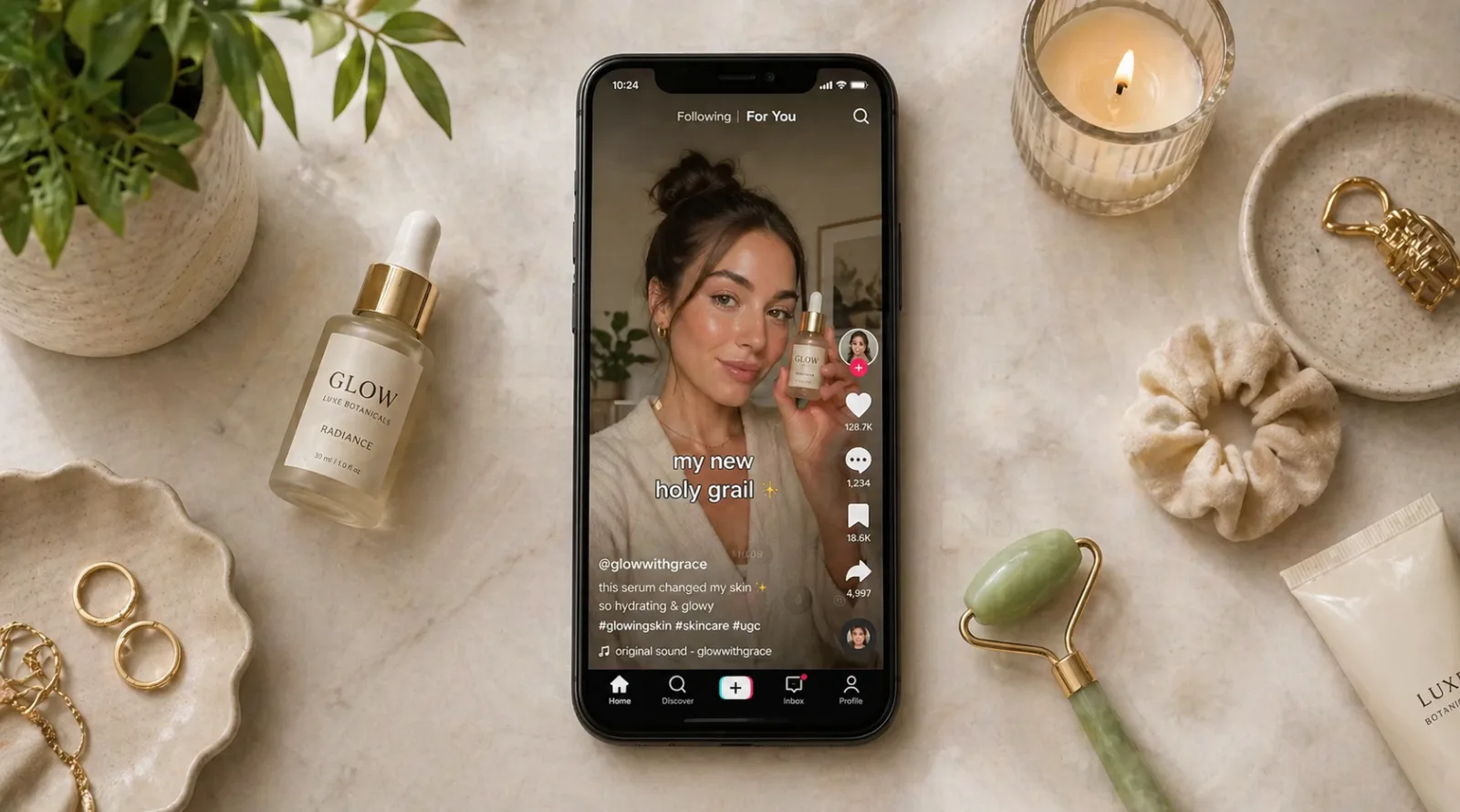
TikTok has fundamentally changed how brands grow. In 2026, the brands winning on social are not the ones with the biggest production budgets. They are the ones with the most authentic volume: a constant, compounding stream of creator content that the algorithm distributes, audiences trust, and paid media channels can amplify.
This pillar page covers the complete picture: what the data says about TikTok performance, how the algorithm actually works, how to build a UGC engine without a studio, and how to turn creator content into a durable acquisition channel.
Table of Contents
- The State of TikTok Influencer Marketing in 2026
- The Algorithm: Why Volume Wins
- What the Creative Data Actually Shows
- UGC Without the Studio Price Tag
- TikTok Content as Paid Media Fuel
- Building Social Proof That Converts
The State of TikTok Influencer Marketing in 2026
Most TikTok seeding advice is recycled intuition. The TikTok Influencer Marketing Statistics 2026 report is different: it draws on 549 high-intent seeding campaigns run by Shopify merchants across Q1 2026, isolating the algorithm distribution variables that actually move ROI.
The headline findings are worth understanding before you brief a single creator.
The Creator Efficiency Gap
The instinct to seed larger creators is understandable, but it is consistently wrong. The report measures each creator tier by Reach Efficiency Ratio (RER): how many organic views a creator earns per follower, which captures the degree to which TikTok's algorithm trusts that creator to keep people on the app.
Nano-influencers (under 10,000 followers) consistently produce a higher multiple of algorithmic reach per follower compared to macro accounts. The ceiling for nano reach is statistically higher relative to their cost. This mirrors the broader engagement rate data, where nano-influencers deliver engagement rates of up to 18x those of mega-influencers on TikTok. More followers does not mean more reach. It often means less.
The Commercial Intent Tax
Direct, "shill-style" affiliate promotion carries a measurable algorithmic penalty. The Q1 2026 data tracks the Incentive Throttle Ratio: the reach gap between organic-structure content and content that signals obvious commercial intent to TikTok's detection systems.
The penalty for getting this wrong is significant. Success requires a "native incentive" approach: affiliate codes and brand mentions woven into the story, not announced from a script. When the hook is organic-first and the incentive is subtle, distribution yields remain high. When it reads as an ad, it gets distributed like one.
Algorithm Tightening
Free organic reach is becoming a scarcer resource. The Q1 data shows a network-wide contraction in median reach efficiency as TikTok prioritises denser, higher-fidelity engagement signals. This makes the ROI premium on content-first structures (problem-solution hooks, nano-tier creators, authentic delivery) more critical, not less. Brands that relied on broad-reach seeding to a few large creators are feeling this most acutely.
For the full benchmark data broken down by creator tier, hook type, niche, and reveal timing, read the TikTok Influencer Marketing Statistics 2026 report.
The Algorithm: Why Volume Wins
TikTok and Instagram have shifted toward an interest-based graph. The algorithm does not wait for a post to go viral to amplify it. It proactively looks for signals that something is gaining momentum, and one of the most powerful signals is cluster behaviour: multiple pieces of content about the same brand or product appearing in a compressed time window.
When the algorithm sees your brand being tagged, mentioned, or searched across multiple accounts in the same week, it starts drawing connections. Content from your existing followers gets prioritised. Discovery feed placement widens. The hashtags around your brand see increased visibility. This is the same mechanism behind organic trends: why a sound, a format, or a product suddenly appears everywhere in your feed over the course of a few days.
The key insight, detailed in The Algorithm Volume Play, is that you can engineer this cluster deliberately.
How the Volume Play Works
Rather than spacing creator posts evenly across weeks and hoping something takes off, the volume play batches them into a concentrated 10-14 day window. If you send 100 seeding packages in a single month, timed so the majority of deliveries hit the same fortnight, and assume a 30-40% post rate, you generate 30-40 creators posting about your brand within a fortnight. Each post tags your account. Each post is watched by an audience that follows that creator specifically because they care about your product category.
The algorithm sees a surge of content featuring your brand, from multiple accounts, with positive engagement signals concentrated in a specific niche. It begins surfacing your brand in suggested search results, "related content" sections under similar posts, and the For You pages of people who have engaged with your product category.
This is not guaranteed virality. But it is as close to engineering a trending moment as any brand without a nine-figure marketing budget can get. And crucially, it does not require any single post to perform exceptionally well. The cumulative signal of many good posts is more powerful than one exceptional one.
Why Nano and Micro Creators Make This More Effective
The volume play is most effective when the creators posting are concentrated in the same niche, reaching overlapping audiences. A single macro-influencer with a million followers reaches a broad, diverse audience. Thirty nano-influencers, each with 10,000-50,000 followers in the same niche, all posting in the same week, reach far more of the right audience through multiple independent signals. The algorithm sees your brand repeatedly across accounts that share a thematic identity. That is what creates the trending signal.
To maximise the cluster, ship in a tight batch (all packages out within three to five days), send a delivery nudge when tracking shows the package has arrived, give a soft deadline framed around the campaign window, and amplify the first creator posts that come in to signal to others that the content is being seen.
What the Creative Data Actually Shows
Most brands leave creative performance entirely to chance. They brief creators on what to say about the product and hope for the best. The analysis of hundreds of TikTok seeding campaigns in How Hook, Aesthetic, and Niche Drive TikTok Virality in 2026 shows that specific creative decisions consistently separate high-performing content from expensive filler, and these decisions are all controllable from the brief.
Hook Structure
Problem-solution content outperforms every other format on high-value actions: clicks, saves, and purchase intent. At the opposite end sits the talking head: a creator speaking directly to camera about a product without narrative tension. It generates views. It does not generate intent.
A creator saying "this product is amazing" is a testimonial. A creator saying "I tried everything for X and nothing worked until..." is a story. Brief for the story. Give creators the specific problem your product solves and let them find it in their own lives. The authenticity of that struggle is what holds attention long enough to convert.
Face Presence
Face presence in a video more than doubles view count. This held across niches and content styles. The mechanism is completion rate: faces drive attention retention, and the TikTok algorithm rewards content that gets watched in full. Requiring face presence in your brief is not optional if reach is your goal.
Setting and Authenticity
Outdoor settings and natural light outperform studios. Indoor content also performs well when it feels genuinely lived-in: bedrooms and kitchens outperform "content spaces." The common thread is environmental authenticity, not production value. "Film wherever you feel comfortable" produces studio-adjacent content. "Film this outside, in natural light, with the product in frame from the first second" produces something the algorithm treats as organic, and distributes accordingly.
Sentiment
The highest-volume niches on TikTok, including beauty, home, and fashion, are dominated by positive sentiment. This is exactly why balanced content stands out. Content where a creator is honest and willing to acknowledge a minor drawback outperforms uniformly positive content on trust signals and long-term purchase intent. When every creator in your niche sounds like a fan, the creator who sounds like a person becomes the one people trust.
Product Reveal Timing
When you show the product matters as much as how you show it. The data consistently rewards early commitment: revealing the product in the hook significantly outperforms midpoint or end reveals. By the time a "surprise" reveal happens in the final seconds, the algorithm's distribution decision has usually already been made.
These five variables are all decisions that most brands leave entirely to creators by default. Performance is being left on the table by default.
UGC Without the Studio Price Tag
Every brand on TikTok and Instagram needs content, not occasionally but constantly. The algorithm rewards consistency, short-form video dominates feed placement, and your paid ad account needs a steady supply of fresh creative to avoid fatigue. Hiring a production agency to solve this costs $5,000 to $20,000 per shoot. You get a handful of polished clips, and three weeks later they have burnt out.
The brands that win the content game are not outspending everyone. They have built systems that generate a continuous supply of authentic, high-performing assets at a fraction of the cost, as covered in full in How to Generate UGC Without a Production Studio.
Product Seeding as a Content Engine
Influencer seeding is the highest-leverage UGC method available to a Shopify brand. Running a seeding programme at scale, sending product to 100 creators per month with an average post rate of 30-40%, generates 30-40 pieces of authentic video content every single month. Each piece is filmed on a real person's phone, in a real home, in a real moment: exactly the lo-fi aesthetic that outperforms polished studio content on every major platform.
The cost is the product plus shipping, typically $15-40 per unit delivered. Compare that to $5,000 for five clips from a production house, and the maths are not subtle. More importantly, seeded content comes with real organic distribution attached, which paid UGC platforms cannot offer.
One seeding campaign becomes your creative library for the quarter. With the right licensing terms in your creator agreements, that content can be repurposed across paid ads, product pages, email campaigns, and your own social channels.
Other UGC Sources That Compound
Beyond seeding, several additional methods layer well into a content engine:
Organic customer reviews with a visual prompt. Your existing customers are already your most credible advocates. A post-purchase insert or email asking happy customers to share a photo or video converts at around 1-5%, but at volume it compounds. A brand doing 500 orders a month can generate 25-50 pieces of organic customer content from a single well-crafted sequence.
A branded hashtag campaign. A specific, memorable hashtag with a community prompt (a challenge, a feature opportunity, or a prize) can generate significant content volume when the product lends itself to a visual moment: unboxing, transformation, result, or lifestyle integration.
Behind-the-scenes and founder content. Some of the highest-performing content on TikTok is not about the product at all. Packing orders, responding to reviews, the "why" behind the brand: this builds parasocial trust faster than almost anything else, at zero production cost.
Paid UGC creators as a bridge. Platforms like Billo and Insense let you commission licensed footage quickly if you need content while your seeding programme is ramping up. The long-term economics heavily favour seeding because gifted content comes with real distribution, but paid UGC is a useful short-term lever.
TikTok Content as Paid Media Fuel
Creator content should not live exclusively on the creator's channel. High-performing organic seeded content is your most cost-efficient paid media creative, and repurposing it for Meta and TikTok ads delivers two compounding advantages.
Solving Creative Fatigue
Creative fatigue is one of the most common reasons Shopify brands plateau on Meta. When your ad reaches the same person repeatedly, their brain starts filtering it out. At the algorithm level, this shows up as declining engagement signals: Meta interprets lower engagement as lower relevance and starts charging more for placements. CPM rises, CTR falls, and ROAS deteriorates, even though nothing about your targeting or offer has changed.
On a moderate budget, you can exhaust an audience's tolerance for a specific creative in two to four weeks. The fix is not targeting adjustments or budget increases. It is a constant supply of fresh creative.
A seeding programme producing 30-40 pieces of creator content per month gives your media buyer real options: A/B testing hooks, testing different creators against different audience segments, finding out which content type drives the lowest CPA. Instead of a $5,000 shoot producing five clips that burn out in a month, you have a rotating library that stays fresh.
Why Lo-Fi Outperforms Polished
Bright lights, perfect colour grading, professional voiceover: these are the signals that make a viewer's brain categorise content as an ad. The moment the brain categorises something as an ad, it discounts it. Creator content filmed on a phone in natural light with authentic enthusiasm does not trigger that filter. It looks like the content around it and feels like a recommendation. That earned trust translates directly into conversion.
The practical framework for a brand spending $5,000-$20,000 per month on Meta: seed 50-100 creators per month on an ongoing basis, collect and review submitted content weekly, launch 3-5 new creatives per week, replace any creative older than three weeks, and increase budget behind top performers as data confirms their efficiency.
Building Social Proof That Converts
The creator content you generate through seeding is not only an ad creative asset. It is also the social proof infrastructure that makes your Shopify store convert.
Research consistently shows that 69% of consumers trust influencer recommendations more than content from the brand itself. A 30-second clip from a credible nano-influencer in your niche, embedded on your product page, is worth more than a paragraph of brand copy because it bypasses the "this brand wrote this about themselves" filter entirely.
The seven most effective trust signals for Shopify stores, covered in full in 7 Ways to Build Instant Trust on a New Shopify Store, include:
Creator and influencer video on product pages. Licence creator content from your seeding programme for on-site use. A real person demonstrating your product and recommending it is the highest-performing conversion signal available at zero incremental cost.
An "As Seen On" social proof stripe. When a creator with a credible following posts about your product, you have a third-party validation signal. Display creator mentions on your homepage or product pages: their handle, a screenshot of the post, their follower count. "Loved by 40+ creators" communicates peer validation at a glance.
Live social proof numbers. The number of creators who have featured your product, your social following across platforms, the number of five-star reviews. You do not need huge numbers for these to be effective. "Trusted by 200 creators" on a product launched six months ago signals momentum, and momentum reads as legitimacy.
Retargeting with creator content. Many visitors do not buy on the first visit. The most effective retargeting creative for closing that loop is a real person using your product, addressing the hesitation a non-converting visitor likely has: "I was sceptical at first too" or "I'm three weeks in and here's what I've noticed." Build this from your seeding content library. The volume-play approach, seeding to dozens of creators at once, ensures you always have new faces and new angles to rotate into retargeting sequences.
Start building your TikTok content engine with Sonar Seed
Essential Tools for TikTok Growth
- Tool: TikTok Exporter - Analyse competitor content and find high-engagement creators in any niche.
- Tool: Gifting ROI Calculator - Model the economics of your seeding programme before you launch.
- Support: Collect and Review Content - How to manage and review creator submissions inside Sonar Seed.