How To Find Influencers For Shopify Stores That Convert
Learn how to find influencers for Shopify stores using Sonar Seed to automate gifting, track fraud-protected ROI, and scale your DTC brand revenue.

Shopify merchants are increasingly swapping paid ads for authentic social proof, which makes knowing how to find influencers for Shopify stores that actually convert more important than ever. Many merchants turn to Sonar Seed, a native Shopify app that manages the entire creator lifecycle, from automated product gifting to fraud-protected commission tracking, directly inside your existing dashboard.
We built this guide to help you find creators who drive real revenue rather than chase follower counts. Small, engaged accounts frequently outperform big-budget endorsements, and scaling that approach means moving past manual tracking toward real influencer operations. Our earlier guide on how to find nano influencers breaks down how to identify these high-value partners for your store.
The Challenge: Escaping Manual Spreadsheet Chaos with Sonar Seed
Many Shopify merchants managing influencer gifting still rely on disconnected shipping logs, scattered spreadsheets, and inbox threads that are easy to lose track of. This disorganized approach wastes time and hides the real performance of your campaigns.
Solving this operational problem is the first step toward finding influencers for Shopify stores who actually move product. Moving from manual tracking to a centralized, native solution often separates a stalled campaign from a steady revenue stream.
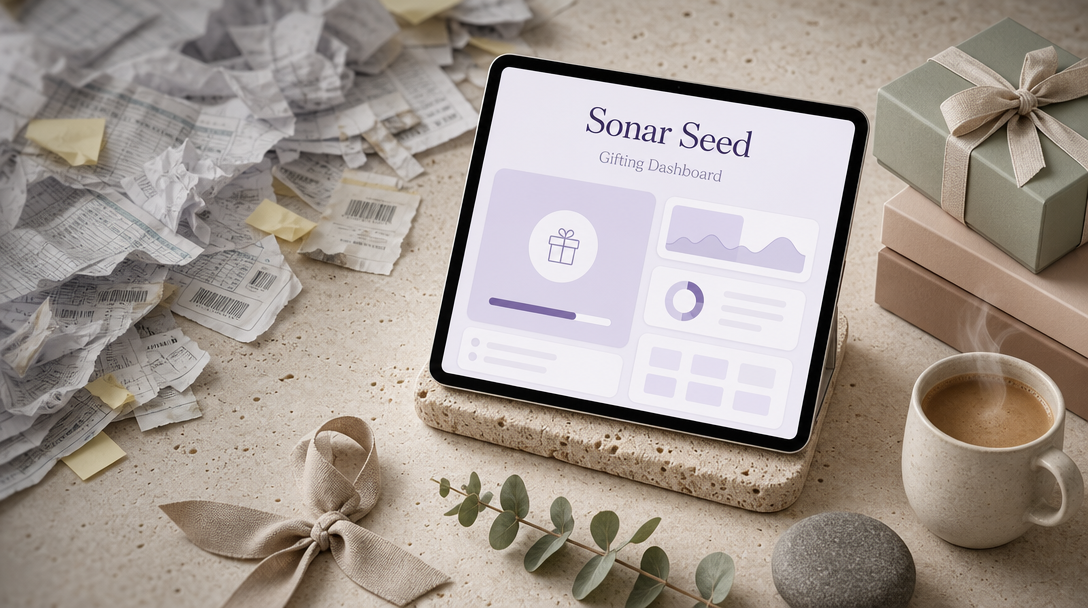
We built Sonar Seed to solve this by running your entire gifting workflow inside your Shopify dashboard. You can manage product gifting, track creator progress, and oversee ambassador relationships without leaving your store's admin panel.
Our platform automates key post-gifting tasks: coupon generation, fraud-protected commission tracking that flags suspicious activity like self-referrals or duplicate discount codes, and syncing with Klaviyo, an email and SMS marketing platform many DTC brands already rely on to nurture customers.
Early-stage stores testing gifting for the first time and scaling brands optimizing an existing pipeline both get a lean, profit-driven system instead of bloated enterprise software.
Outreach on Shopify works best once it moves past basic admin work and toward strategy that drives sales. The guide UK TikTok Influencer Marketing for Scalable UGC makes the case for treating creator partnerships as a professional, data-driven sales channel rather than a side project.
The article How Brands Should Partner With Top Hair Care Influencers shows how an automated dashboard removes the logistical friction that slows down e-commerce growth, leaving more time for outreach and relationship building instead of paperwork.
Other platforms take different approaches to the same problem. Shopify Collabs offers all-in-one affiliate tracking, and Insense covers the broader shift toward automated management platforms.
The Shopify Store Owner's Guide to Influencer Marketing lays out structured methods for keeping campaigns data-driven and manageable. Whatever tool you choose, the goal stays the same: get gifting off spreadsheets and onto a system that gives you clear, auditable numbers.
With the logistics handled, the next question is strategic: which creators to gift to, what to send, and how to turn their content into sales.
Building a Winning Influencer Marketing Strategy
Building a winning influencer marketing strategy starts with setting goals that go beyond vanity metrics like follower counts. Focus instead on outcomes you can measure, such as conversion rate or customer acquisition cost (the amount you spend to gain each new customer). Specific targets give you a way to justify your marketing spend and make sure every partnership serves a clear purpose in your growth funnel.
Examples of goals worth tracking include:
- Conversion rate from influencer-driven traffic
- Customer acquisition cost per campaign
- Average order value from gifted-product sales
- Repeat purchase rate among customers referred by creators
Good planning also depends on understanding your audience and the creators they already trust. Instead of reaching out to as many people as possible, look for influencers whose content style and values match your brand. This kind of alignment creates authentic partnerships and builds a community of ambassadors who genuinely want to see your brand succeed.
As detailed in Influencer Marketing Strategy: A 5-Step Guide for 2026, success comes from mapping business goals to clear performance indicators and treating each collaboration as a professional partnership rather than a one-off transaction.
Once your goals and target creator profiles are set, you need an organized way to manage outreach and gifting, or opportunities will slip through the cracks. This is exactly the gap Sonar Seed was built to close, giving founders one dashboard to run creator relationships instead of juggling spreadsheets and inboxes.
For a practical framework, The Complete Guide to Influencer Marketing in 2025 walks through how to research competitors and select influencers across different tiers, from nano-creators with a few thousand followers to established names with large audiences.
Data should guide every decision you make after that. Track each collaboration from the initial product gift through to final conversion metrics, so you can see exactly what drives revenue for your store. This cycle of testing, tracking, and adjusting is what turns a one-time campaign into a program that scales with your business.
With a strategy in place, it's time to put it into action: reaching out to creators, following up, and keeping the process efficient as your list of partners grows.
| Metric | Description |
|---|---|
| Conversion Rate | Percentage of influencer-driven traffic that completes a purchase |
| Customer Acquisition Cost | Total spend required to gain a new customer per campaign |
| Average Order Value | Mean value of sales generated from gifted-product campaigns |
| Repeat Purchase Rate | Frequency of return purchases from customers referred by creators |
Mastering Shopify Influencer Outreach
Turning cold leads into engaged partners takes personalized outreach, not a generic script. Many merchants get stuck managing this process through spreadsheets and disconnected tools instead of a single system built into their Shopify dashboard.
Automating ambassador workflows, from product gifting to commission tracking, lets you stay in control while running lean. We designed Sonar Seed to replace that manual complexity with one connected system that syncs with tools like Klaviyo, so a creator who accepts a gifted product is instantly tied to a coupon code and every sale it generates.
Removing routine coordination frees you to focus on strategy, so every partnership contributes directly to your bottom line.
Targeted outreach beats broad outreach. Focusing on your immediate geographic area builds authentic engagement with people who already shop nearby. Our guide on finding local influencers for Shopify stores that convert breaks down how to build community-based partnerships, like a coffee brand teaming up with local baristas who already talk about their products.
For a closer look at how smaller, highly engaged creators compare to big-name accounts, check our guide on finding micro influencers for your Shopify store.
Instagram Influencer Marketing for Ecommerce covers how to evaluate engagement metrics and use tools to speed up creator discovery, reinforcing why genuine connection matters more than raw follower counts.
Once relationships start forming, the next challenge is figuring out which creators are actually worth the investment, since not every partnership deserves a lasting spot in your program.
Once you have your outreach system in place, the next challenge is deciding how to structure your partnerships for maximum impact. In this video, Influencity breaks down seven effective collaboration ideas that move beyond the basics, helping you build meaningful, conversion-focused relationships with creators that drive real growth for your brand.
Vetting Creators and Maximizing ROI
Beyond the initial outreach, the real challenge is separating fleeting viral moments from genuine conversion powerhouses that protect your bottom line. Getting good at finding influencers for Shopify stores means judging creators on more than surface-level numbers like follower counts, and focusing instead on those who show authentic resonance with their audience.
When you prioritize creators who align with your brand values, you build a group of ambassadors who advocate for your products with real sincerity. That sincerity naturally drives higher conversion rates for your storefront.
A disciplined vetting process forms the foundation of a sustainable influencer marketing strategy. A systematic evaluation helps you avoid ineffective collaborations and gives every product gift a specific, measurable purpose.
Key Vetting Criteria to Check
Before sending free products, look at more than just follower count. Check a creator's engagement rate, the percentage of followers who like, comment, or share their content. A creator with 5,000 highly engaged followers can easily outperform one with 50,000 passive followers, which is why engagement rate matters more than raw reach.
- Engagement rate compared to follower count
- Audience demographics matched to your target customer
- Content quality and fit with your brand's tone
- Track record with similar products or brands
This rigor turns your outreach from a speculative expense into a precise revenue driver. Once you define your criteria, you can move forward with Shopify influencer outreach, confident that each partnership rests on shared goals and proven potential.
Moving away from fragmented spreadsheets and email threads starts with using the right systems. Tools built specifically for e-commerce founders give you full control over your ambassador program, with transparent ROI tracking built directly into your existing Shopify dashboard.

Scaling Your Strategy: How To Find Influencers For Shopify Stores and Build Community
Once you move past the initial vetting stage, the real work begins. The goal shifts from simply filling a roster to building a genuine community of brand advocates who reflect your store's mission and drive repeat revenue.
Disconnected tools and outdated processes often slow this stage down. Swapping them for lean, automated workflows keeps your program efficient as it scales. We designed Sonar Seed so founders can manage gifting and user-generated content (UGC), meaning customer- and creator-made photos and videos, directly inside their Shopify dashboard, cutting out the admin work that typically bogs down growing brands.
A strong influencer marketing strategy depends on smooth execution behind the scenes. We handle that through automated coupon generation and fraud-protected commission tracking, so every partnership stays clean and profitable without extra manual work.
Turning one-off gifting campaigns into lasting partnerships is where outreach really pays off. Deep integration with Klaviyo lets you send consistent, personalized messages that keep creators engaged long after their first unboxing post.
Here's a quick recap of what it takes to find and scale the right influencer partnerships for your Shopify store:
- Move gifting and UGC management off spreadsheets and into one dashboard with Sonar Seed.
- Build a strategy around automated coupon generation and fraud-protected commission tracking.
- Handle outreach by syncing with tools like Klaviyo for personalized, ongoing communication.
- Vet creators carefully and track ROI so every partnership earns its place in your program.
Turning your influencer program into a dependable growth channel starts with the right tools, not more manual work. Start your influencer seeding campaign with Sonar Seed and build a creator community that grows your store for years to come.