Food Influencer Campaigns That Boost Sales for Shopify Brands
Scale your brand with high-converting Food Influencer Campaigns using Sonar Seed. Automate gifting, fraud-protected tracking, and Shopify ROI.
Shopify merchants are moving away from traditional ads and toward creator-led growth, and food influencer campaigns are driving much of that shift. Pairing authentic content with data-backed partnerships turns casual scrollers into loyal, repeat customers. Managing these partnerships by hand, though, tends to collapse into a chaotic mix of spreadsheets and missed follow-ups.
We built Sonar Seed to solve that problem from inside your Shopify dashboard. Our app automates product gifting, coupon generation, and commission tracking with fraud protection built in, so you can run high-converting campaigns without the manual grind. In our guide on influencer campaign strategies for scalable UGC growth, we show you how to repurpose creator content into lasting social proof. This article builds on that foundation, walking you through how to run a winning campaign with culinary creators, track the metrics that matter, and scale your brand without the busywork.
Solving the Manual Spreadsheet Chaos with Sonar Seed
Running food influencer campaigns through spreadsheets creates real bottlenecks. Product shipments get lost, creator messages go unanswered, and performance data disappears into forgotten tabs. This kind of chaos makes it hard to scale a gifting program without burning through time and cash.
Centralizing that workflow removes most of the guesswork. Instead of juggling five different tools, you get one native app that shows every campaign at a glance—when a creator agrees to a gifting deal, the product ships, a unique discount code generates, and the interaction logs itself, no spreadsheet required.
That automation frees your team to focus on strategy instead of admin tasks. A centralized system turns gifting from a guessing game into a measurable growth channel, giving you the visibility to see exactly which creators drive sales and adjust your budget accordingly.
With that operational foundation in place, the next question is how to choose the right partners and build a strategy that consistently delivers results.
Developing an Effective Food Influencer Marketing Strategy
Building high-impact food influencer campaigns takes more than a list of names—it takes a plan that matches your brand's voice with genuine culinary storytelling. We've found that focusing on authentic partnerships instead of broad, impersonal reach builds the kind of connection that actually resonates with customers.
This is where Sonar Seed comes in—letting you manage product gifting, coupons, and commissions from one place instead of stitching together separate tools, so your team can focus on meaningful engagement instead of administrative busywork.
Once you select your partners, automated workflows track performance and drive real sales. Coupon generation and commission tracking with built-in fraud protection give you clear data on your return on investment (ROI), whether you're an early-stage store testing the waters or a scaling DTC brand optimizing ambassador workflows.
Syncing these campaigns with Klaviyo, the email marketing platform many Shopify stores already run on, turns one-time shoutouts into long-term customer relationships. Running niche influencer campaigns lets you reach highly engaged communities that align with your product's specific values, so your marketing spend drives genuine interest rather than follower counts alone.
Shopify brands with physical locations can tap into local partnerships too, not just e-commerce shipping. Our guide on foodie influencers for restaurant marketing covers how to use these partnerships to drive foot traffic and brand awareness.
Choosing the right influencer tier matters as much as choosing the right partner:
- Nano-influencers (typically 1,000 to 10,000 followers) offer tight-knit, highly engaged audiences.
- Mega-influencers deliver massive reach, but often at a lower engagement rate.
Sprout Social's strategy guide walks through how to match influencer tiers to campaign goals, but topical alignment—not raw follower counts—is what actually turns social proof into revenue.
A sustainable food influencer marketing program depends on more than gut feel when picking partners within a given tier. Coursera's breakdown of influencer marketing narrows the decision to three factors: how much an audience engages with a creator's content, how closely their niche matches your product, and how far their reach actually extends. Weighing all three beats fixating on any single number.
Industry research from Italian Food News backs this up, pointing to data-driven selection and long-term collaborations—not one-off posts—as the real drivers of commercial results.
Plastic Container City's research on restaurant influencer marketing makes a similar case: audience demographics and engagement rates need review before budget commits, not after. And the Digital Agency Network's guide to food influencer marketing highlights UGC and limited-edition product drops as reliable ways to convert casual followers into repeat customers. Turning that research into practice starts with restaurant-specific tactics, covered next.
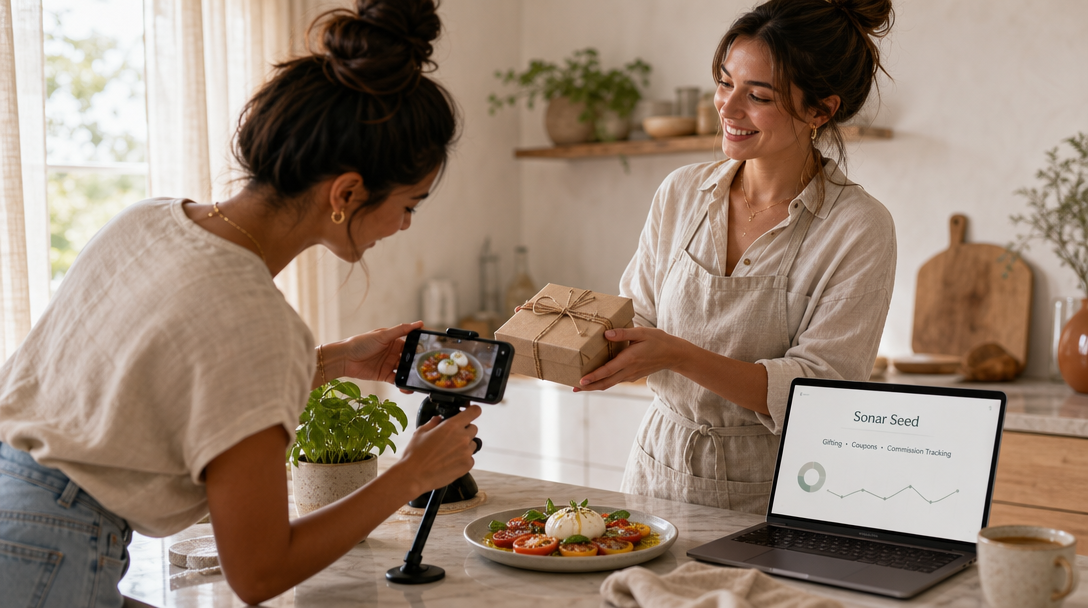
Implementing a High-Impact Restaurant Influencer Strategy
Turning passive followers into paying customers takes more than handing out free meals to local foodies. It calls for a restaurant influencer strategy built on clear goals from the start.
Start by defining what success looks like for your restaurant. You might aim to drive foot traffic during slow Tuesday nights, or build buzz around a new seasonal menu. A taco shop, for instance, could partner with a local food creator to promote a limited-time brunch menu, tracking reservations made through a unique promo code.
Vet each creator carefully to make sure their aesthetic and audience match your brand—that's what keeps a collaboration feeling organic instead of forced. Set clear deliverables upfront, like the number of posts, stories, or reels, so you're measuring real results instead of vanity metrics.
Scaling this beyond a handful of local creators means moving past scattered text threads and one-off tracking. An automated system handles the entire process, from sending gifted products to tracking coupon codes, so you can see exactly how many sales or reservations a specific creator generated—and know which partnerships to double down on.
UGC, or user-generated content—authentic photos and videos posted by real customers rather than produced by your brand—builds trust with potential diners in a way polished ads rarely do. Encourage creators to share honest, unscripted stories about their experience.
Auditing these campaigns regularly shows you which creators drive the highest conversions, so you can build a sustainable growth cycle around what actually works. For a deeper look at turning gifting relationships into consistent sales, check out our guide on influencer brand partnerships.
Local engagement drives restaurant traffic, but the same principles apply across e-commerce more broadly. If you want to diversify your reach beyond food, our travel influencer marketing strategy breaks down tactics you can apply to any Shopify store.
From here, proving the value of that pipeline matters just as much as running it—the next section covers how to measure ROI and turn your program into a dependable sales channel.
| Strategy Component | Description |
|---|---|
| Goal Setting | Define clear objectives like increasing foot traffic or promoting new menu items. |
| Creator Vetting | Ensure creator aesthetic and audience align with your brand for organic collaboration. |
| Deliverable Planning | Set specific requirements like number of posts or stories to measure performance. |
| Operational Efficiency | Use automated systems to track gifting and coupon codes rather than manual methods. |
| Performance Auditing | Regularly review conversion data to identify high-performing partnerships. |
| Content Authenticity | Prioritize honest, user-generated content over corporate-style advertisements. |
Measuring ROI and Scaling Your Influencer Program
Turning social buzz into real revenue starts with knowing exactly which creator partnerships actually pay off. Tracking metrics like coupon code redemptions and referral traffic tells you who drives genuine sales versus who just racks up likes.
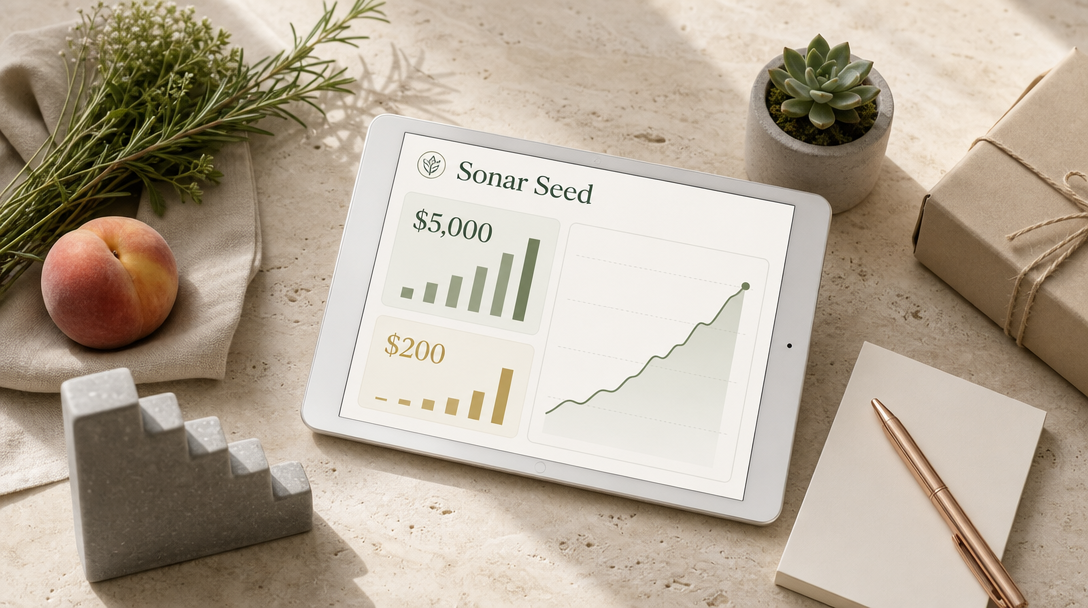
If one creator's unique code brings in $5,000 in orders while another's brings in $200, the budget decision makes itself.
We built this tracking directly into Sonar Seed so you never need a spreadsheet or a separate analytics tool to see your numbers—just a real-time view of how much profit each partnership actually generates.
Once you spot your top performers, scaling turns into strategic expansion instead of guesswork. Automating your ambassador workflows lets you manage larger groups of creators while keeping the gifting pipeline consistent as your brand grows.
Built-in fraud protection and automated coupon generation keep your margins intact while partners promote your products freely, freeing your team to focus on growth strategy instead of admin work.
Syncing that data with Klaviyo connects these partnerships to your broader email flows, so every customer touchpoint traces back to the influencer who started the relationship.
That kind of granular reporting lets you refine outreach and double down on what actually works, keeping your program organized as it scales—something we cover in detail in our influencer strategy guide for Shopify brands.
Scaling and Automating Your Future Food Influencer Campaigns
Scaling food influencer campaigns comes down to one shift: ditching disconnected tools for a single connected workflow that ties gifting directly to sales goals.
Here's a quick recap of what it takes to get there:
- Centralize the workflow: replace scattered trackers with one dashboard that handles gifting, coupons, and commissions in one place.
- Pick partners deliberately: choose creators whose audience matches your product, and set clear gifting terms upfront.
- Go local when it makes sense: pair restaurant creators with time-limited offers to drive foot traffic and online orders together.
- Track what converts: monitor coupon redemptions and commission data so you can double down on the creators who actually move sales.
Sonar Seed runs all of this from one native app, so every step stays organized as your brand grows. Automated coupon generation and Klaviyo syncing cut manual work and reduce human error, letting your team manage more creators without adding headcount.
Protecting your margins matters just as much as growing your reach. Built-in fraud protection on every commission gives you full visibility into campaign performance, so every dollar spent ties back to your bottom line.
That kind of centralized system turns influencer gifting into a lasting revenue channel instead of a one-time experiment, giving your store a foundation that scales as it grows.
Start your influencer seeding campaign with Sonar Seed and turn every gifted product into trackable, fraud-protected sales.